Discover Taiwan’s Resilient Communities
Discover Taiwan’s Resilient Communities: From Assessment to Action in Taiwan’s SEPLS | A Practitioner-Oriented Case Study Booklet
Resilience Assessment in Taiwan’s socio-ecological production landscapes and seascapes (SEPLS)
How can resilience indicators be applied across diverse SEPLS settings?
How can resilience assessment move beyond a checklist to drive real action on the ground?
How can resilience indicators support monitoring of management effectiveness in SEPLS — and even other effective area-based conservation measures (OECMs)?
These questions lie at the heart of this booklet.
Link: Discover Taiwan’s Resilient SEPLS: From Assessment to Action in Taiwan’s SEPLS | A Practitioner-Oriented Case Study Booklet
Across Taiwan today, SEPLS face multiple, overlapping challenges: climate change, extreme weather events, biodiversity decline, aging rural populations, shifting agricultural markets, and increasing land-use pressures. In this context, resilience is no longer a concept requiring special explanation. Our communities often express it simply: “A resilient SEPLS is a healthy SEPLS.”
Yet a practical challenge follows: how can SEPLS resilience be understood, discussed, and assessed? Unlike human health, SEPLS do not require thermometers or laboratory tests. Instead, community-based resilience assessment workshops (RAWs), built around five social-ecological perspectives (ABCDE) and twenty Indicators of Resilience in SEPLS, provide a structured way for communities and practitioners to reflect collectively on ecological, social, cultural, governance, and economic conditions.
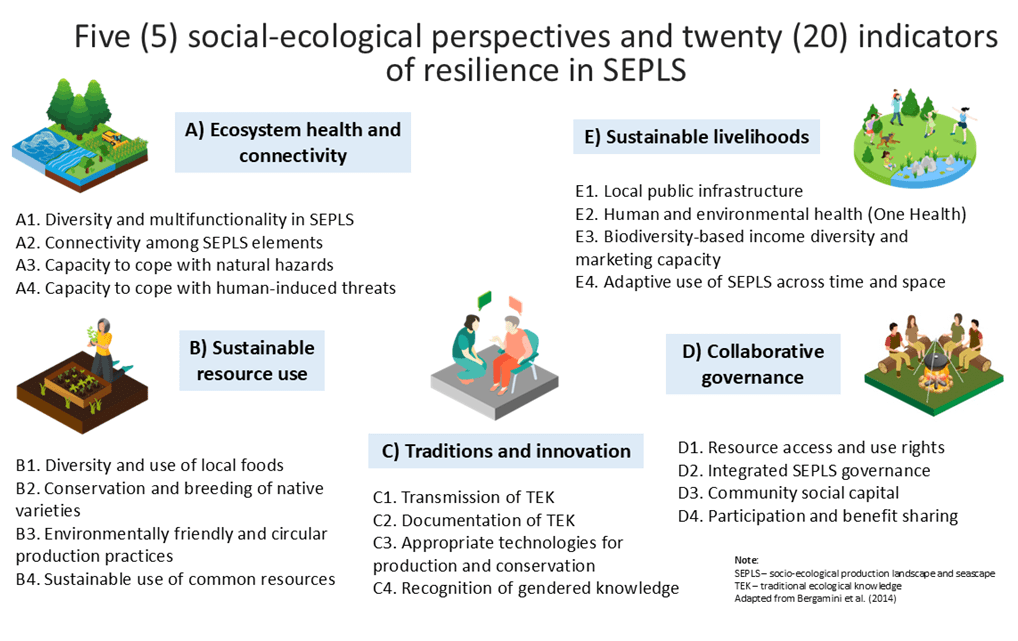
RAWs to ACM: From Resilience Assessment to Adaptive Co-Management
Between 2021 and 2025, National Dong Hwa University and the Forestry and Nature Conservation Agency (FANCA, formerly the Forestry Bureau) pioneered a nationwide approach known as RAWs-to-ACM — from resilience assessment workshops to adaptive co-management.
Implemented through eight regional branches of FANCA — each supporting two SEPLS sites over a five-year period — the initiative was facilitated through the Taiwan Partnership for the Satoyama Initiative (TPSI), with strong coordination provided by its regional exchange bases: the Dharma Drum Institute of Liberal Arts (TPSI-North), Taiwan Biodiversity Research Institute (TPSI-West), National Pingtung University of Science and Technology (TPSI-South), and National Dong Hwa University (TPSI-East). Together, these institutions played key roles in coordination, facilitation, and cross-regional learning, helping translate resilience assessment from a shared framework into locally grounded practice across diverse SEPLS contexts.
Building on The Toolkit of Indicators of Resilience in SEPLS (Bergamini et al., 2014) and lessons from the first pilot site in the coastal Xinshe SEPLS, Hualien County, Taiwan, the approach evolved into a practical three-step process designed to connect assessment with action.
Step 1 — Localization of indicators
The five perspectives and twenty indicators were adapted to Taiwanese SEPLS contexts. Language was simplified, graphics introduced, and place-based examples developed to help communities relate the framework to daily experience.
Step 2 — Community-based resilience assessment
RAWs were facilitated by trained teams supported by TPSI regional exchange bases and FANCA, with training-of-trainers and cross-site learning playing a key role. The focus was on dialogue, shared interpretation, and collective reflection rather than technical scoring alone.
Step 3 — From assessment to action
RAWs results were translated into ACM through local action planning, stakeholder engagement, and the development of multi-stakeholder partnerships.
Over five years, sixteen SEPLS communities completed this RAWs-to-ACM process, demonstrating how resilience indicators can become catalysts for learning and adaptive practice rather than static assessment tools.
RAWs to ACM to TEN: Linking Local Action to Wider Landscape Conservation
These experiences also take place within a broader ecological and policy context. Each SEPLS forms part of the Taiwan Ecological Network (TEN), where living landscapes and seascapes are recognized as important ecological connectivity nodes. Positioning SEPLS within this biodiversity-focused spatial planning strategy helps link local management priorities (e.g., water management, eco-friendly production, biocultural diversity conservation) with wider landscape-scale conservation objectives, creating opportunities for coordination between community initiatives and national policy.
At the same time, resilience assessment has increasing relevance for other effective area-based conservation measures (OECMs). The assessment process can provide a structured way to understand how governance, biodiversity values, and socio-ecological functions interact within a SEPLS, supporting reflection on its potential role as an OECM. Repeated assessments may also contribute to tracking management effectiveness over time, offering a practical basis for adaptive management within living landscapes.
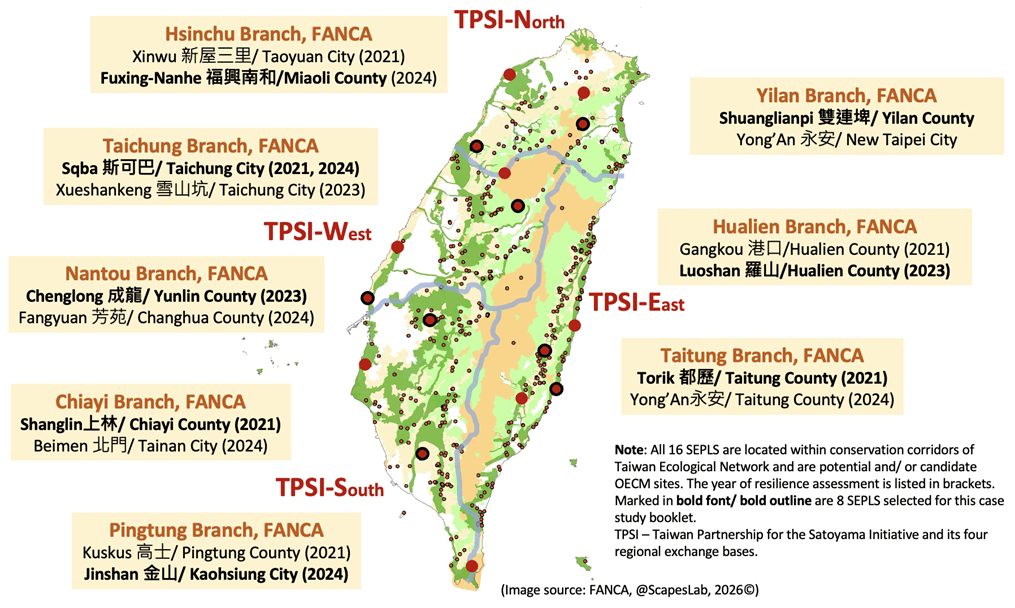
Meet the Case Studies
This booklet presents eight SEPLS* from across northern, western, southern, and eastern Taiwan, illustrating how resilience assessment can evolve into adaptive action in diverse socio-ecological and production contexts. Below is a brief preview of the cases.
*In the examples below, the abbreviation SEPL is used for socio-ecological production landscapes (i.e., inland areas, no seascape element present).
TPSI-North (supported by the Dharma Drum Institute of Liberal Arts)
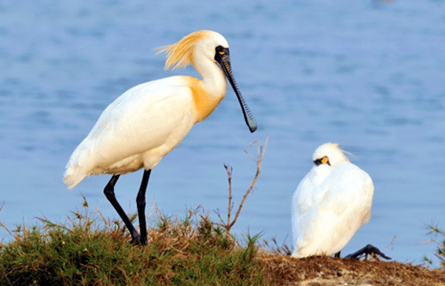
Shuanglianpi SEPL, Yilan County (FANCA, Yilan Branch)
A nationally protected wetland embedded within a working agricultural landscape, where resilience assessment helped move beyond long-standing conservation conflict toward collaborative approaches linking wetland protection, water management, and farming livelihoods.
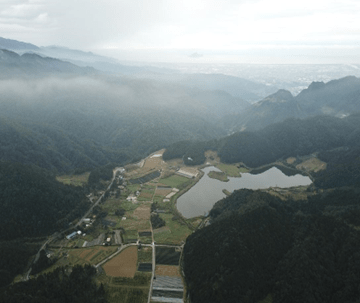
Fuxing–Nanhe SEPL, Miaoli County (FANCA, Hsinchu Branch)
A biodiversity-rich healing landscape where forests, farms, and leisure agriculture converge. RAWs helped communities recognize ecological strengths while identifying the institutional, monitoring and innovation gaps needed to sustain well-being-oriented livelihoods.
TPSI-West (supported by Taiwan Biodiversity Research Institute)
Chenglong SEPLS, Yunlin County (FANCA, Nantou Branch)
A coastal wetland shaped by land subsidence and environmental change, where communities reframed flooding and aquaculture challenges into adaptive wetland stewardship grounded in experimentation and learning.
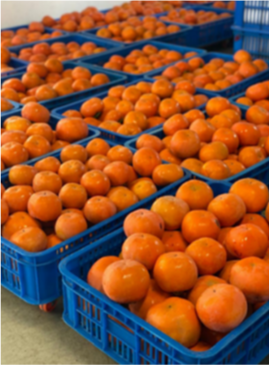
Sqba SEPL, Taichung City (FANCA, Taichung Branch)
An Indigenous Atayal mountain orchard landscape where farming, forests, and cultural continuity remain deeply intertwined. Repeated RAWs cycles (2021 and 2024) helped strengthen community capacity and refine practical responses to agriculture, conservation, and cultural transmission.
TPSI-South (supported by National Pingtung University of Science and Technology)
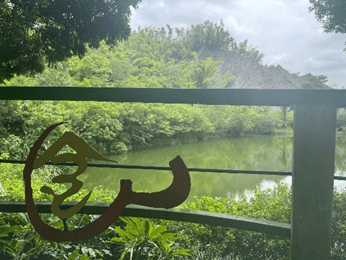
Shanglin SEPL, Chiayi County (FANCA, Chiayi Branch)
A bamboo Satoyama landscape where frog-friendly farming practices connect biodiversity conservation with agricultural livelihoods, demonstrating how species-focused stewardship can mobilize wider landscape management.

Jinshan SEPL, Kaohsiung City (FANCA, Pingtung Branch)
A striking mudstone badlands landscape where guava farming, geobiodiversity, and community identity intersect. Resilience assessment helped local groups reframe environmental challenges into opportunities for learning, interpretation, and future livelihood pathways.
TPSI-East (supported by the National Dong Hwa University)
Luoshan SEPL, Hualien County (FANCA, Hualien Branch)
Taiwan’s first organic village, where resilience assessment helped transition from a production-focused model toward integrated governance and landscape-level coordination.

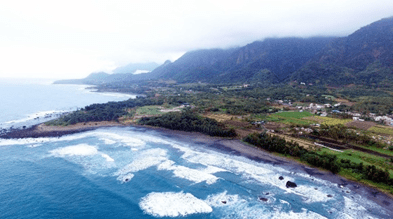
Torik SEPLS, Taitung County (FANCA, Taitung Branch)
An Indigenous Amis ridge-to-reef landscape–seascape, where elders and youth used resilience assessment to strengthen biocultural stewardship linking forests, rivers, paddies, and coastal ecosystems.
How to Read This Booklet
Each case study invites readers to explore how resilience assessment was translated into adaptive action across diverse SEPLS contexts. To support comparison while respecting local uniqueness, all cases follow a shared structure: introducing the ecological, socio-cultural, and economic context of the SEPLS; describing the RAWs process and its outcomes; showing how assessment informed ACM; and presenting community visions and lessons learned.
The booklet concludes with a synthesis of practitioner takeaway principles designed to support readers in designing, facilitating, or accompanying resilience assessment processes.
We hope this booklet serves as a reflective companion for SEPLS practitioners — and as a practical resource for those exploring resilience assessment as a pathway toward biodiversity conservation and sustainable landscape and seascape management.
 國立東華大學永續發展中心里山里海辦公室